
Is EV Chargepoint Installation Suitable for Your Property?
Owning an electric vehicle is only one part of deciding whether a home chargepoint will suit your property. The practical answer depends on how you park, where a charger could go and how the electrical installation serves the building. Two households with similar vehicles can face quite different installation decisions because their properties are laid out differently.
Start with the parking arrangement
The charger needs to serve the place where the vehicle is normally parked. If you have a driveway beside the house, the distance between the parking space and a possible charger position may be straightforward. If you park in a garage, behind the property or in a separate space, the cable route and charger position become more important.
Think about the routine, not just whether the cable can reach once. Would the vehicle be parked in the same place most of the time? Could a cable cross a path, doorway or shared area? Would the charger be exposed to knocks from vehicles or obstruct access? These practical details can influence where equipment is sensibly placed and whether the arrangement will remain convenient.
In a terrace or a home without off-street parking, the main question may be whether there is a suitable private parking space at all. A charger at the property is not automatically useful if the vehicle is usually parked elsewhere. For flats and managed properties, ownership and permission also matter: check who controls the parking space and whether the relevant property manager or other decision-maker needs to approve the proposal.
The building affects the route
A charger is connected to the property’s electrical installation, so the route from that installation to the parking position matters. The route may be short and direct, or it may need to pass through several parts of the building or around its exterior. Walls, outbuildings, access and the position of existing electrical equipment all affect what is practical.
This is why property age alone does not settle the question. An older home may have a convenient route and a suitable installation, while a newer property may have a parking space that is awkward to reach electrically. The layout is more useful to consider than a simple old-versus-new rule.
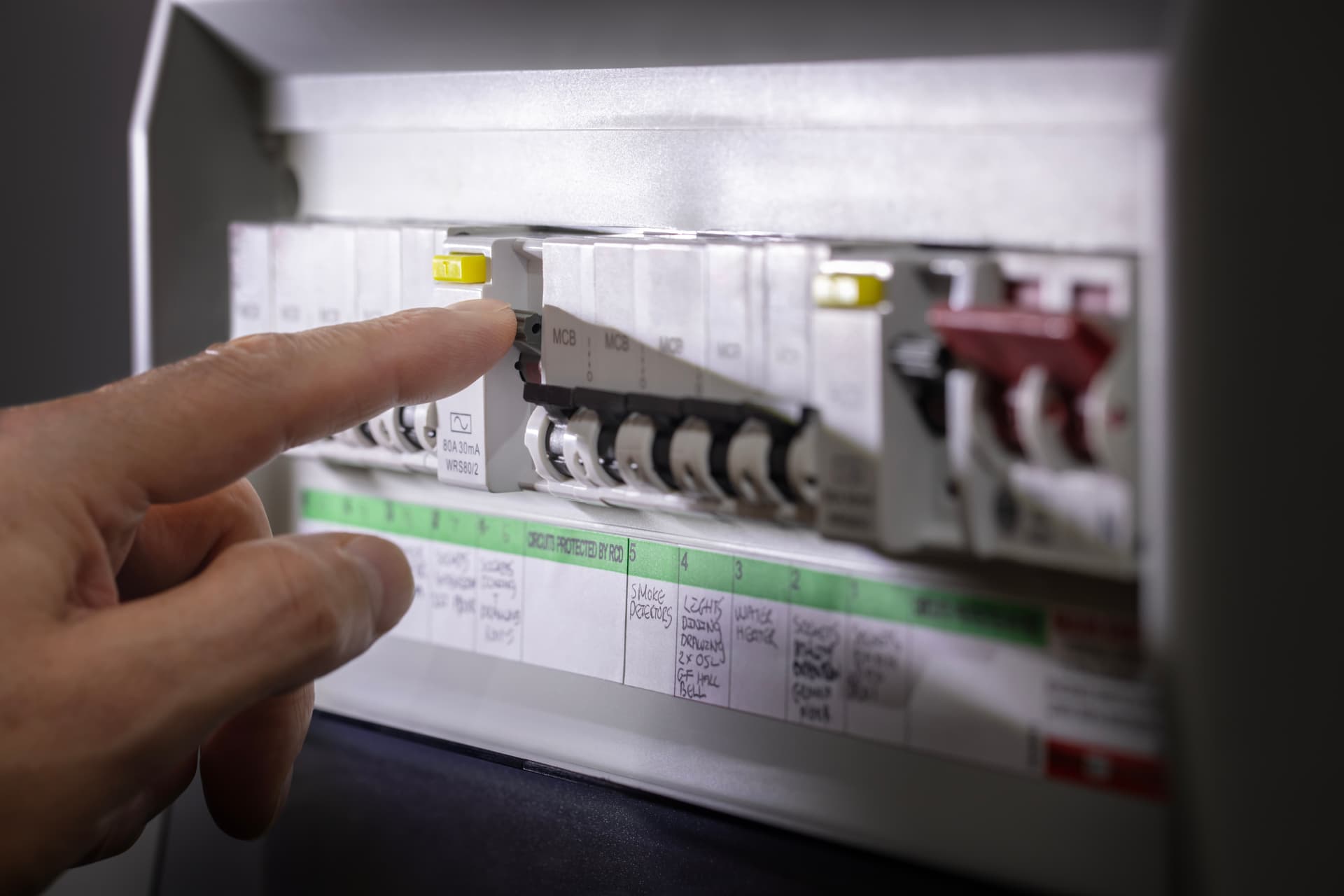
Before discussing installation, note where the consumer unit (fuse box) is, where you park and the likely route between them. You do not need to open electrical equipment or inspect wiring. A simple description, or photographs of the parking area and possible route, can help explain the layout when you speak with an electrician.
The existing electrical installation matters
A chargepoint uses a significant amount of electricity, so the property’s existing electrical setup needs to be considered. Whether the existing installation can accommodate it depends on the electrical supply and the way the home’s circuits and equipment are arranged. You cannot confirm that by looking at the outside of the consumer unit, and you should not remove its cover or attempt electrical checks yourself.
If you know of previous electrical work, recurring problems or changes to the property’s electrical setup, mention them when discussing the project. Those details do not automatically mean a chargepoint is unsuitable. They help an electrician understand what needs to be considered before deciding how the installation can be approached.
When the answer needs more than a quick yes or no
Some homes have a clear parking space, a practical route and an electrical installation that can be assessed without complicated access. Other properties involve shared parking, a detached garage, restricted cable routes or several people who need to agree to the work. Each factor can change the options, rather than making the property automatically suitable or unsuitable.
For a landlord, property manager or owner of a shared building, consider how the arrangement will work for the people using the space. The question is not only where the chargepoint can be placed, but also who has authority over that location and how access will be managed. Get those points clear before treating a proposed position as settled.
Make the decision from the property, not the vehicle
A useful first check is to describe four things: where the car is normally parked, who controls that space, where the electrical installation is located and what route might connect the two. That gives a more meaningful starting point than choosing a charger before considering the building.
At Hodgson Electrical, we discuss EV chargepoint installations across Wakefield and nearby areas, including Castleford, Pontefract and Sandal. If your property has a less obvious parking or cable arrangement, explain those details when you get in touch. For an overview of the service, see our EV Chargepoint Installation page.