
Tripping Circuits or Faulty Sockets: Safe Checks for Homeowners
Start with what changed
A circuit that trips is a warning, not a diagnosis. The useful clues are what was running, which parts of the home lost power and whether the problem returns after you disconnect appliances. These details can help narrow down the cause without opening a socket or touching wiring.
If you notice sparks, a burning smell, smoke, a hot socket or visible damage, do not use that outlet or investigate it yourself. If you can safely switch off the affected circuit at the consumer unit, do so. Keep away from exposed or damaged wiring and arrange help from a qualified electrician.
What you can check safely
First, look at the pattern. Has one socket stopped working, or have several sockets, lights or appliances lost power? Did the trip happen when you switched on a particular appliance, or does it happen even when nothing obvious is being used? Make a note of what you find. Don’t remove the consumer unit cover, faceplate or any other electrical fitting to look for the cause.
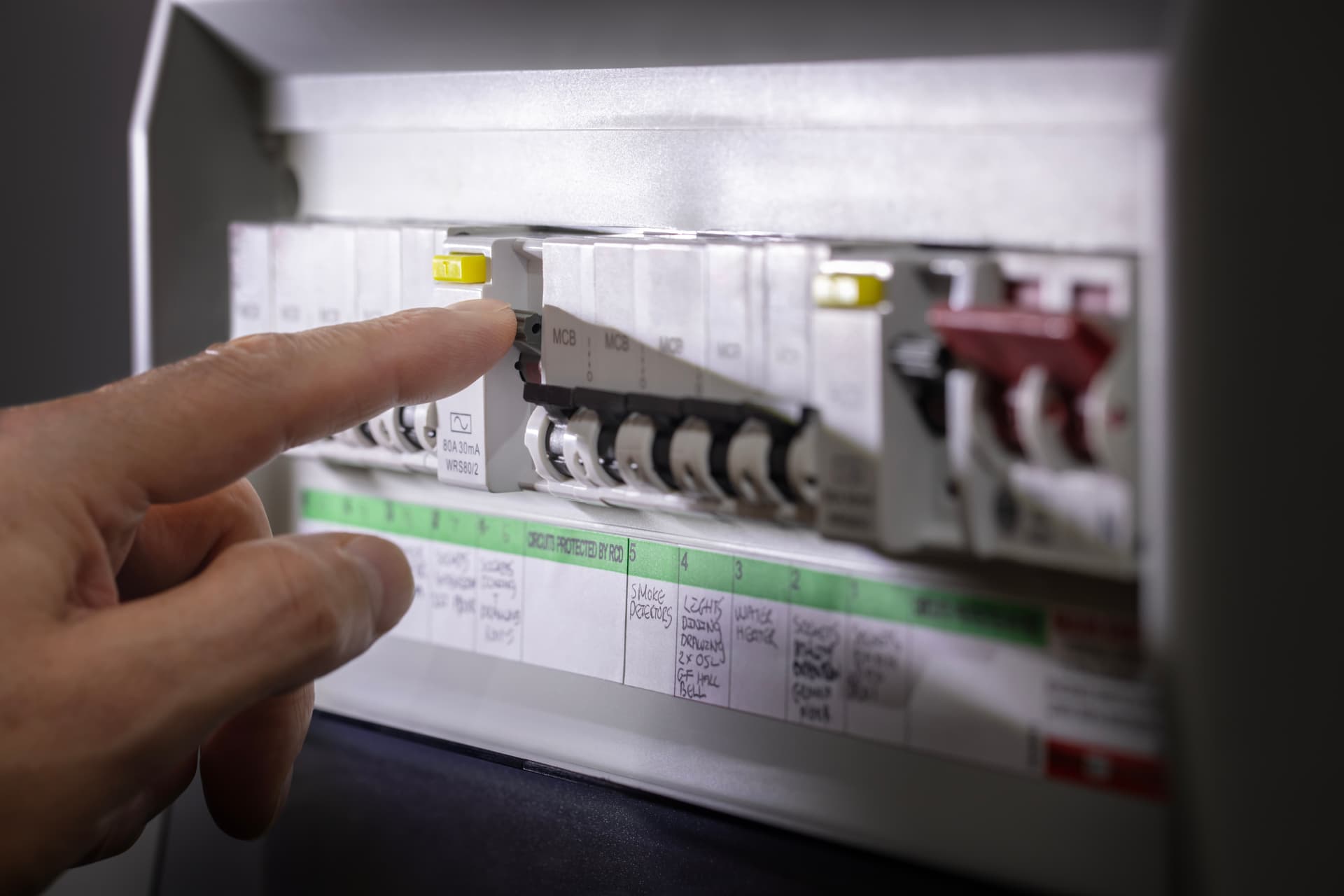
If there are no signs of heat, damage or burning, switch off appliances on the affected circuit and unplug accessible plugs. You can then try resetting the relevant switch at the consumer unit once. If it will not stay on, leave it off. Repeatedly resetting it will not fix the underlying fault and may expose you to further risk.
If the circuit stays on, reconnect appliances one at a time, using them normally and watching for a repeat trip. If the same appliance appears to trigger the problem, stop using it and unplug it if it is safe to do so. Do not keep testing it in different sockets. A damaged appliance or lead needs attention in its own right, and another trip could point to a wider issue.
If the circuit trips again with appliances unplugged, or the switch will not reset, stop there. The fault could be in fixed wiring, a socket, a lighting point or equipment that cannot be unplugged easily. Identifying and repairing that safely requires an electrician, not more trial and error at the consumer unit.
Reading the signs at a socket
A socket that feels loose, looks cracked or discoloured, buzzes, smells unusual or becomes warm is not one to keep using. Don’t wiggle a plug to make it work, and don’t remove the socket front to inspect the connections. Stop using it and keep others from plugging into it.
A single dead socket does not automatically mean that socket is the only problem. It may be connected to the same circuit as other points, so check whether nearby sockets or lights have also stopped working. That information is useful, but it does not establish where the fault is. If several points are affected, or the problem returns after a reset, leave diagnosis to an electrician.
What the pattern can tell you
A trip that follows one appliance being switched on gives a helpful starting point, but it does not prove the appliance is at fault. The appliance may have a fault, the circuit may be overloaded, or an existing problem may only show itself when that appliance is used. Likewise, a trip with nothing obvious plugged in does not tell you which wire or fitting is responsible.
This is why a symptom and its cause are not always the same thing. Swapping sockets, fitting a replacement or repeatedly resetting a switch can mask the clue without resolving the fault. Record what was on, what stopped working and what happened when you tried a single reset. Tell the electrician about any heat, smell, noise or visible damage, and whether the issue affects one point or several.
When to call an electrician
Stop using the affected socket or circuit if you find damage, heat, a burning smell, buzzing or repeated trips. Don’t attempt a repair inside the consumer unit or socket, and don’t keep restoring power to see whether the fault has gone away. If there are no urgent warning signs but the circuit continues to trip, professional fault finding can establish what needs attention.
Here at Hodgson Electrical, we carry out domestic electrical work across Wakefield, including investigating faulty sockets and tripping circuits. As a NAPIT registered business, we can assess the symptoms and explain the next steps based on what the fault shows. For an overview of the service, see our Domestic Electrical Services page.
Before contacting us, note which switches or appliances were involved and what lost power. You do not need to identify the fault yourself. Clear observations, combined with leaving unsafe equipment untouched, are the most useful checks you can make at home.
